

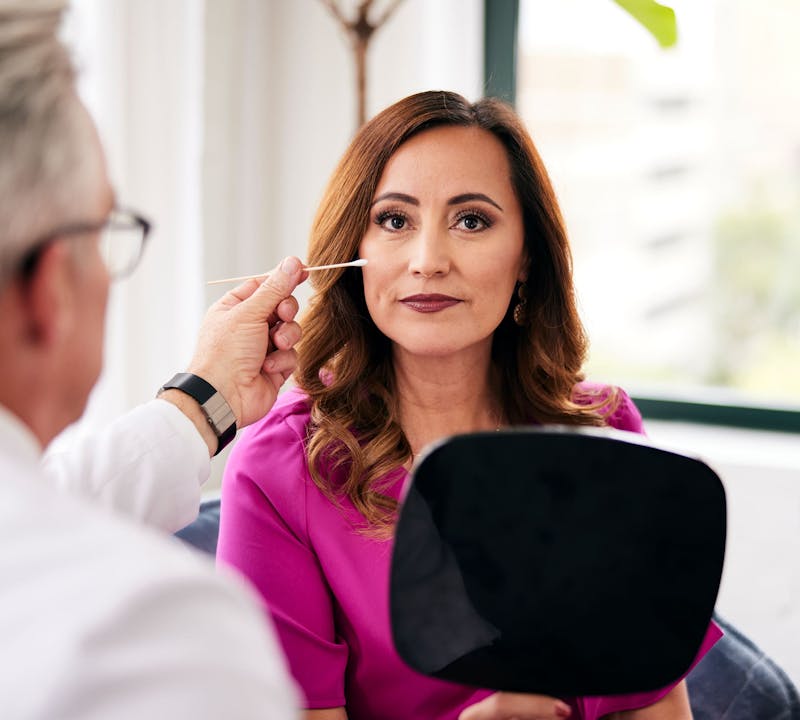
Patients who were satisfied with the results of their first Botox treatment usually will not hesitate to go back to the clinic for a second session to maintain results. And usually, these follow-up treatments are discussed by their doctor during a consultation or at least after the first treatment. Patients should also discuss follow-up treatments with their doctor even if they haven’t yet decided whether to or not to go back a second time just so they can make an educated decision when the time comes.
On that note, here are a few things you can expect with your second Botox treatment:
1. Botox units could be fewer compared to your first session
If you go back to your doctor for a follow-up at the first signs of the toxin dissipating, i.e., lines or wrinkles have become slightly visible, your doctor may administer fewer units of the toxin this time around because there could still be lingering effects of your initial treatment. On the other hand, if you wait until the toxin has completely dissipated and your wrinkles are once again as visible as before, you may be given the same units or dose, if not more.
As you can see, several factors could affect the units or doses to be administered during a follow-up session so make sure to discuss these with your doctor before receiving your second treatment.
2. Does Botox Work Better the Second Time?
Many patients find that Botox works better the second time because their muscles are already conditioned, allowing their doctor to fine-tune the dosing, but results vary. Some people may experience similar or slightly slower results, depending on their metabolism, muscle strength, and the timing between treatments. Overall, the second session is often more predictable, but not always stronger.
3. Timing is everything - How soon can you get Botox again?
Concerning the above, you should take note of the time between your first and second sessions; that is, how soon can you get Botox again? Botox results usually last between four to six months so if you notice the same dynamic lines and wrinkles appearing on the second month, the doctor may have given you fewer doses than needed. Before you get your second treatment, ask your doctor why the results didn’t last as long as they should have. There are other reasons why this might have happened such as your body’s response to the toxin or your metabolism. It’s best to have an open discussion about your concerns with your doctor to avoid misunderstandings or jumping to the wrong conclusion.
4. Some treated areas may no longer respond to Botox
Some patients complain that a second session didn’t have the desired effect; that is, they didn’t get the same satisfactory results from their first treatment. There could be several reasons why this happened but for the most part, this happens because the once-dynamic wrinkles that Botox effectively treated are no longer dynamic. They’ve become deep lines that appeared at rest, which means they’re not a result of facial movements or expressions. If this is the case, Botox may no longer be the best non-invasive treatment for them. Your doctor will recommend other, more appropriate treatments.
5. Results may not follow the same timeline as the initial treatment’s
Another concern that most patients have is not seeing results within the same timeframe as their first treatments. In general, this is not a cause for concern as the Botox may simply need more time to take effect the second time around. Doctors recommend waiting between 10 and 14 days. If the desired results still have not appeared by then, it’s time to visit your doctor to find out why the results are less than satisfactory this time around.
Got questions?
If you wish to learn more about Botox or other non-invasive wrinkle treatments, please feel free to give us a call at (312) 663-8632. To schedule a virtual consultation with Dr. George T. Moynihan, please fill out the form here.